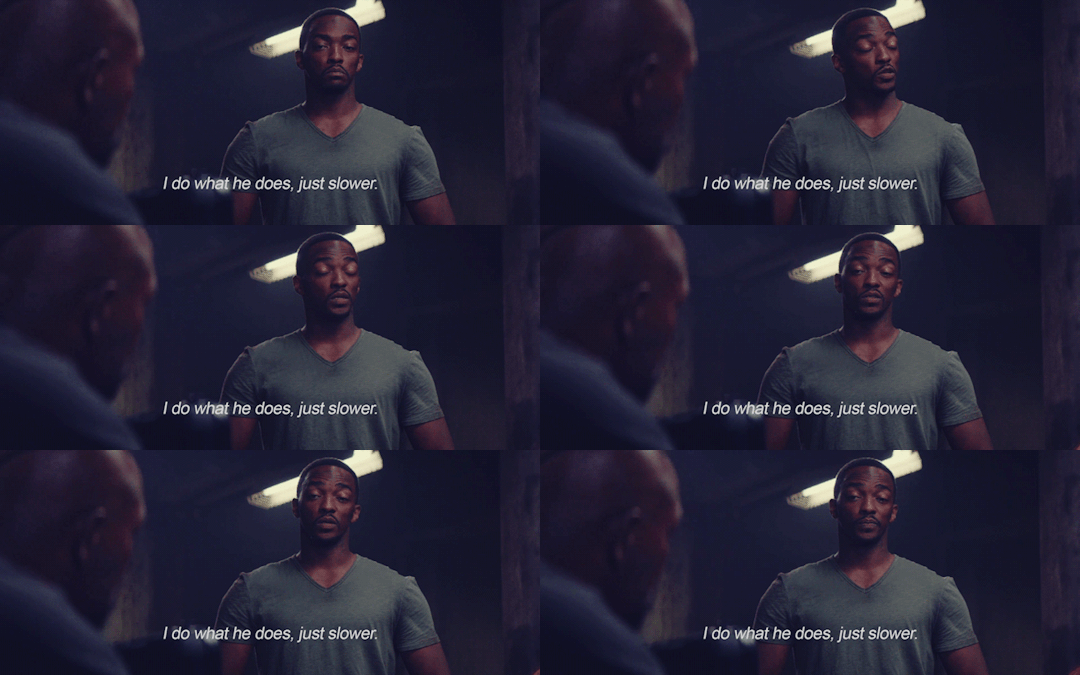
idk how you watch catws and not pick up on the fact that sam is absolutely a mirror of steve… they even straight up say it in the film.
“I do what he does, just slower”
okay we gonna do this because Sam is a reckless motherfucker that absolutely mirrors Steve’s characterization and i’m goddamn tired of people grossly misinterpreting his character b/c it fits in better with their two dimensional therapy dog version of him
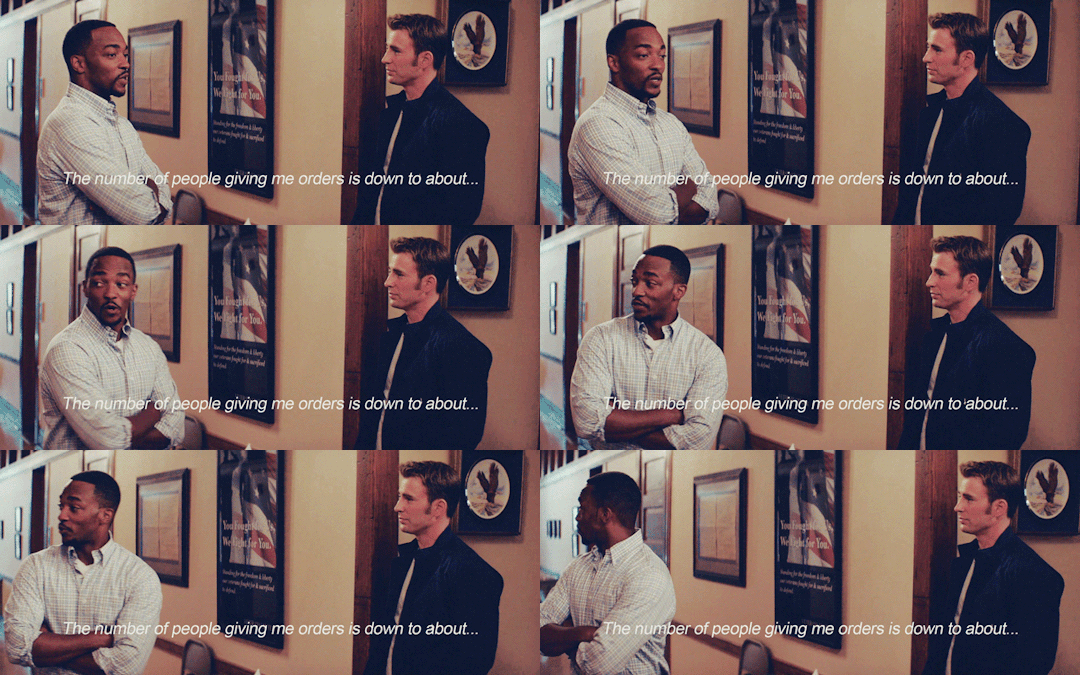
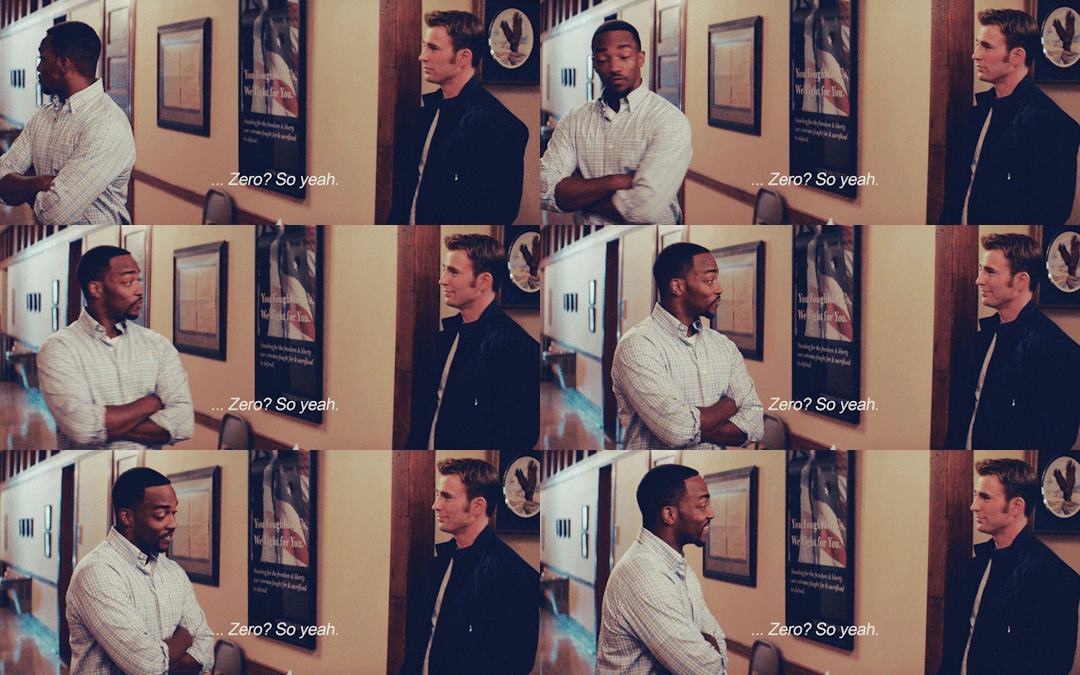
Sam doesn’t like taking orders, he’s not pliant or obedient. He does what he believes is right and damn the rules (sound familiar??). Theres a reason they fucking hit it off so well right from the start.
Following that we have Steve turning up on his doorstep looking like a building got dropped on him. And what does Sam do?
Yeah sure… I’ll let a couple of avengers who just told me everybody is out to kill them into my house. Sounds like a good time. It’s also a bit telling that Sam knows exactly where his suit is. Ten bucks says he’s actually tried to steal it before but couldn’t quite manage it on his own.
And then we start getting into really no holds bar Sam:
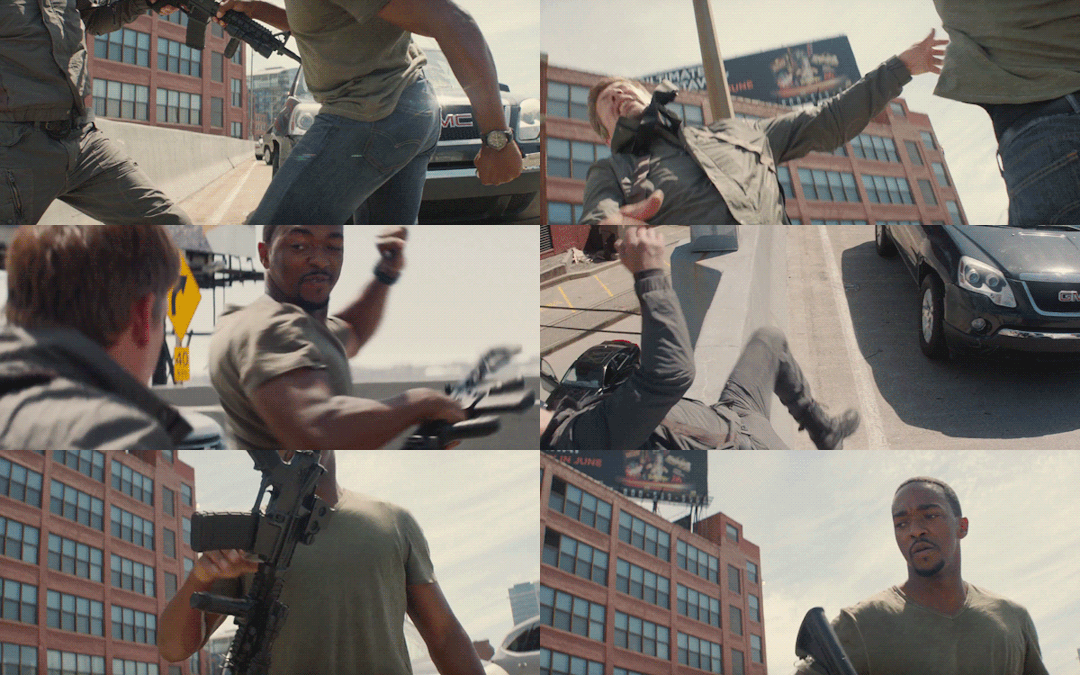
Y’all like to forget Sam brought a two inch knife to a gun fight and won. Not to mention, he clearly walks around with a knife on him at all times… not just in his car, but on his person.
Sam gives no fucks and will take you out. Winter soldier? Bitch try it
Some hydra fool who won’t stop talking Nazi nonsense?
Fuck this guy. he’ll take him on in nothing but a fucking t-shirt.
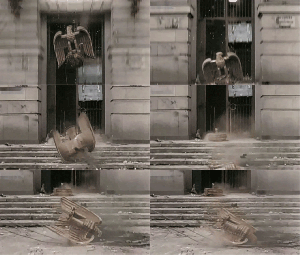
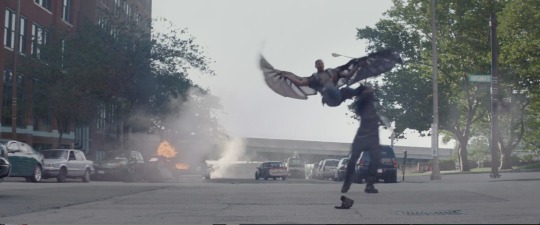
Oh and remember that building that Steve jumped out of? Might as well top that by jumping out of the same one, just about 20 stories up.
Cool, cool, cool.
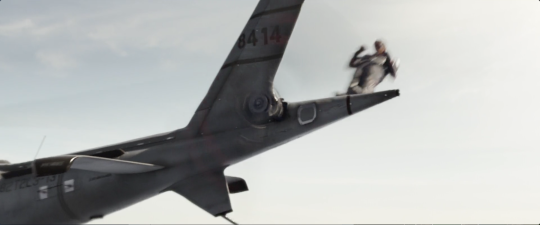
Going feet first towards the rotor blades of a helicopter, knowing if you miss your legs are mulch?
No problem.
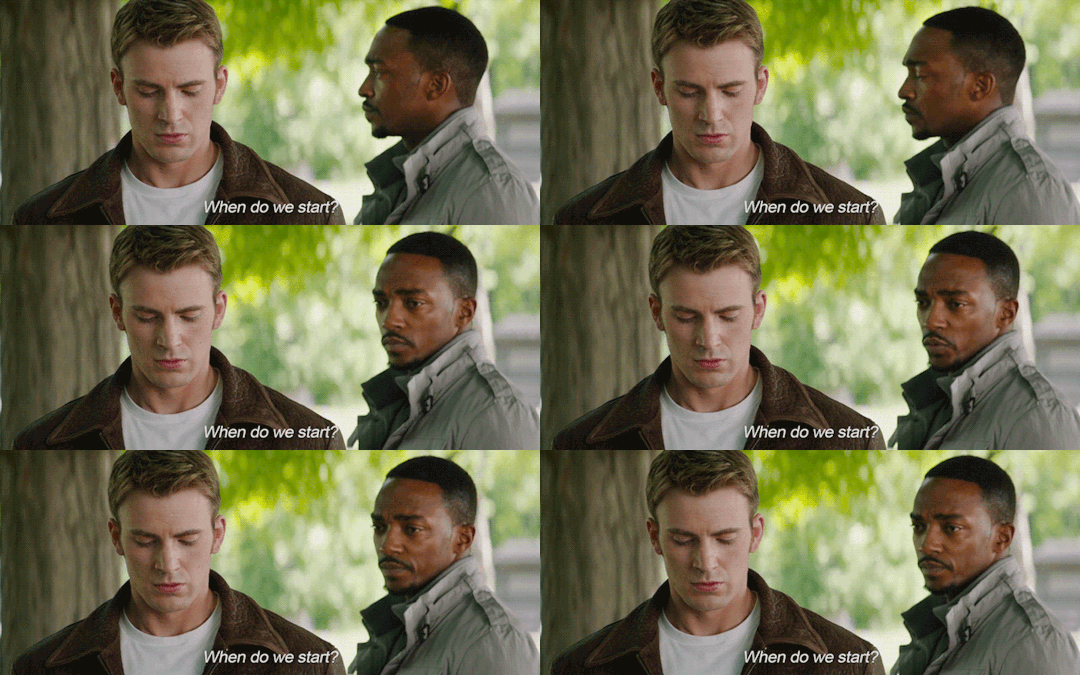
Steve wants to track down an international maybe still brainwashed assassin?
When do we start?
And of course, this wouldn’t be complete without the penultimate Steve/Sam comparison.
So to everyone who trashes him, or does him a disservice by making him out to be nothing more than a therapist who can fix Bucky and Steve I have one thing to say. In the immortal words of the legend Samuel Thomas Wilson himself, “Man, shut the hell up.”
“I see someone who needs help, and I help. You think it’s a weakness. But you’re wrong. It’s what makes us human, which is exactly what we’re supposed to be fighting for. I know who I am. I rescue the helpless. I raise up the hopeless. I don’t measure people’s lives…I save them” –Steve Rogers [Earth-616]
For as long as I can remember I just wanted to do what was right. I guess I’m not quite sure what that is anymore. And I thought I could throw myself back in and follow orders, serve. It’s just not the same.
Captain America: The Winter Soldier (2014) dir. Anthony Russo, Joe Russo
I’ve seen more of those “stop telling when you should be showing” articles floating around in my Tumblr feed, and they got me thinking.
I had responded to an article regarding the whole ‘Show Don’t Tell’ mantra before this year rolled around, and my opinion of it still stands. I think that there’s a place for showing and a place for telling in writing. I also think that professing the whole “only do one and not the other” thing is probably sending the wrong message to young writers.
I understand why the advice is given so readily. I know that a lot of novice writers tend to tell way more than they should, and it’s an easy trap to fall into. Showing is much more difficult and much more time-consuming to do. While I agree that it’s important, and that it can vastly improve your writing, I believe that it’s not something you should strive to do all the time. There are instances where telling is more effective than showing. Aside from pacing, which I explained in the first article, here are a couple of other instances I came up with.
When You Have Something to Hide
Showing is unpacking. Showing is using vivid description (including simile and metaphor), sensory details, and actions to allow the reader to experience the story instead of being told via author exposition. When you do this, you make your writing more interesting, but you also draw attention to whatever it is you’re describing.
This stands out: “Wrapped around his body and held together by hundreds of messy cross-stitches, was a trench coat that smelled like moth balls soaked in cheap beer. The stench was so strong that I found myself plunging my nose into the collar of my own coat before I even reached him.”
A line like this does not: “He wore a tattered trench coat.”
As a reader, you remember the lines of good description where the author takes the time to unpack rather than the lines where you’re just told something.
However, telling can be effective when you’re not trying to draw attention to an aspect of your story. For example, say you have a minor character in the beginning of your story that will end up being a major player later on, but you don’t want the readers to know. You’re going to have to briefly introduce that character in some manner, and then have him slip into the background for a while. You can accomplish this by not giving him a lot of focus, and by proxy, not giving him a shown, memorable description.
This applies to not only characters, but to scenes as well. Sometimes there are incredibly boring things that happen in a story that you as an author is going to want to summarize by telling instead of showing.
As author James Scott Bell puts it, “Sometimes a writer tells as a shortcut, to move quickly to the meaty part of the story or scene. Showing is essentially about making scenes vivid. If you try to do it constantly, the parts that are supposed to stand out won’t, and your readers will get exhausted.”
In essence, showing is about choosing what stands out in a story and what doesn’t. Remember when you’re deciding what you should focus on, always ask yourself why. Why is it important that this character, object, or scene stands out?
Tone of Voice
I’m going to say it here, even if some people don’t agree. I think it’s okay to tell tone, and for that matter, pitch of a character’s voice when appropriate.
When we speak, we have “ups and downs”, and even if we don’t understand the language, we can generally tell if someone is asking a question vs. making a joke vs. giving a command vs. being serious based on them. These “ups and downs”, called inflection, are expressed in text through punctuation and by inferring via the subject matter of a conversation.
However, even with these tools, it’s sometimes hard to gauge how a character sounds without being told, especially if the author has something specific in mind or if what a character is saying doesn’t correlate to how they sound.
For example if you have a character who is talking about killing someone, but is overly cheery about it, it may be prudent to mention the tone since it’s not one commonly associated with the topic of murder.
You can also include a word about tone and/or pitch if there’s a specific way the character sounds, like:
Smooth/Rich/Velvety
Nasally/Breathy
Deep/Gruff/Gravelly/Guttural
Keep in mind that you also have great opportunities to show some of these sounds (depending on what you pick) with great descriptions, again keeping in mind how much focus you want to be put on this character’s voice.
Example: “When he spoke it was like he had swallowed a pail of beach sand.”
Final Words
From author Francine Prose, “Needless to say, many great novelists combine “dramatic” showing with long sections of the flat-out authorial narration that is, I guess, what is meant by telling. And the warning against telling leads to a confusion that causes novice writers to think that everything should be acted out … when in fact the responsibility of showing should be assumed by the energetic and specific use of language.”
Showing vs. telling is all about the choice of what’s going to work better for your story. Don’t be afraid to show. Don’t be afraid to tell. Just know there’s a place for each.
































 the1timetraveller