writing conclusions in papers is like the stupidest thing ever though like what’s the point of dedicating an entire paragraph to “so yeah i know you just read my paper but this is a summarization of what you read in case you need to be reminded about what you just read” like why can’t the paper just end
I keep seeing this post and similar ones, and if y’all’s teachers and professors have left you with the idea that a conclusion is a summary, they have failed you in a big way.
Your conclusion is your “so what’s the fucking point” section. You’ve given you’re reader a lot of info and now they need to know why they care. Depending on the type of paper you should be giving a plan of action, explaining how this knowledge changes our understanding of the topic, link your paper to other disciplines, suggest further areas of study, etc.
One of the best pieces of writing advice I’ve ever received is that if you can’t envision yourself dropping the mic and strutting off stage at the end of your conclusion then it’s probably not strong enough.
“So whats the fucking point” is more helpful than all 6 years I’ve probably been writing papers
Listen up, chucklefucks: I have a point to make.
Some shit went down. Here are the receipts.
Here is the tea.
^ Introduction, supporting paragraphs, conclusion: a basic essay structure.
There are three major things to put into any major essay:
The What
The “So What?”
And the “Now What?”
Your conclusion is the “Now What” — you’ve convinced your readers that they need to pay fucking attention to something, and now you tell them what to do next. It’s not just summarizing and wrapping up your main points for the sake of repeating yourself. It’s like the last five minutes of class where I’m reminding students of the big takeaways about what we learned and giving them the homework that reinforces it in a way that holds their attention while they’re trying to pack up their shit and get out.
Would’ve been nice to know this while I was in school!
Let’s face it, we’ve all been there. Hours of “passive” reading and you feel like you’re good to go until you’re sitting in that test not being able to recall anything. Here are some tips to you out help you with that.
Take notes. Duh.
Not only will this make you more alert while reading, you’re more likely to remember stuff if it’s in your own words. This is time consuming but note taking is honestly the best. AND REMEMBER, they don’t have to pretty or look a certain way, they’re YOUR notes and so you should be able to read them and comprehend them, so make sure you keep that in mind. They also don’t have to be conventional bullet point notes, you can write a paragraph, make a mind map or draw a diagram. Literally anything goes.
Quiz yourself
And you can do this in two ways, most textbooks have a “workbook” or an MCQ book or a self assessment book under the same name, so just get that book and after you’re done with a chapter quiz yourself on it. If you can’t do that then after each paragraph cover it with your hands and recall the important points or what exactly this paragraph was about, a better thing to do is to write a little summary which you can go over later. You’re very likely to make mistakes here so don’t be discouraged, your mind learns by making mistakes.
Visualize
This applies to more skill oriented textbooks rather than basic theoretical stuff, but I’ll try to explain it as best I can. For example, if I’m studying surgery, a certain procedure is written down in the book, instead of just memorizing and making sure I know the steps I visualize it, and this consolidates the idea in my head and makes it very easy to recall. Same thing can be applied to self help books, like if it has tips on your posture or communication skills or whatever, visualize that. You’ll definitely remember it. So if this method is applicable to whatever you’re studying (or reading, this post isn’t necessarily about studying exclusively) definitely try it.
Color code
Very basic but can be very effective. This video explains what I try to do very well. I study medicine so for me, I highlight the etiology/pathogenesis of the disease in blue, clinical picture in pink, investigations in purple and treatment in orange. so whatever you’re doing, set up a color code and highlight away!
Discuss the book or explain it to others
I also mentioned this in my how to study smarter post, but this is how you retain the most information. If you have no one to do this with then pretend you’re explaining it to someone. So kinda like quizzing yourself but out loud. I know I’ve said this before but study groups are godsend. Definitely take advantage of them if that’s possible.
Know why you’re reading this book and what you want out of it.
Also know what you’re reading. We tend to get overwhelmed by the little details and literally get “lost” in the book. Have some clear objectives before you read, these can be found in your course guide in college or syllabus or whatever, write those down on a piece of paper and make sure you’ve fulfilled everything and the things you feel like aren’t as important just skim through. So this is like two points in one, prioritize the information you must know and don’t exert as much effort in the things that are nice to know but won’t do you any harm if you don’t know them. Finish the basic stuff first and then progress.
STOP when you’re burnt out
I have a whole post on this, but obviously you’re a human being and you need your rest.
some memes I made to express my current frustrations with academia feel free to add your own
This is very true. Some tips for coping with crappy writing (because unfortunately you still have to read it) :
Read in stages – first skim for gist and argument; then read more carefully to see how they are building their case; then do a final read to think critically about it.
Understand what you are reading and what its purpose is. Is it a journal article? Book chapter? Textbook chapter? Each of these is written for a different audience with a different aim in mind.
Learn the structure of different types of readings. Journals especially follow a very formulaic structure and knowing what usually appears in each section can help you navigate more effectively.
Be selective. What do you need to get out of this? Will you be quizzed on details? Is it going to be a starting point for a discussion in a seminar? Is it intended to help prepare you for a lecture? Depending on your answer, you may be able to skip certain sections or focus on particular aspects.
If you’re a dyslexic student the best tip with reading academic journals is to place strips of plain paper (or your preferred colour) around the paragraph you’re reading, to help your brain focus and block out the other word noise.
My sociology professor had a really good metaphor for privilege today. She didn’t talk about race or gender or orientation or class, she talked about being left-handed.
A left-handed person walks into most classrooms and immediately is made aware of their left-handedness – they have to sit in a left-handed seat, which restricts their choices of where to sit. If there are not enough left-handed seats, they will have to sit in a right-handed seat and be continuously aware of their left-handedness. (There are other examples like left-handed scissors or baseball mitts as well.)
Meanwhile, right-handed people have much more choice about where to sit, and almost never have to think about their right-handedness.
Does this mean right-handed people are bad? No.
Does it mean that we should replace all right-handed desks with left-handed desks? No.
But could we maybe use different desk styles that can accommodate everyone and makes it so nobody has limited options or constant awareness that they are different? Yes.
Now think of this as a metaphor. For social class. For race. For ethnicity. For gender. For orientation. For anything else that sets us apart.
WHY DOESN’T THIS HAVE MORE NOTES?
Because I posted it about 90 seconds ago, calm down.
It is very important that the language in your novel reflects the time and place in which the story is set.
For example, my story is set in Italy. My characters would never “ride shotgun”, a term coined in US in the early 1900s referring to riding alongside the driver with a shotgun to gun bandits.
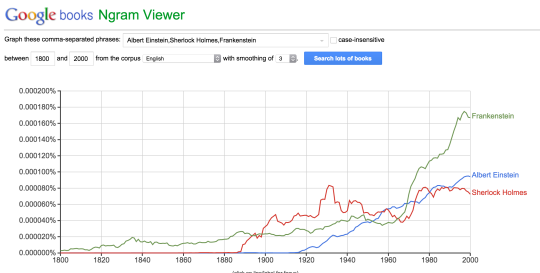
Do your research! A free tool that I found to be very useful is Ngram Viewer.
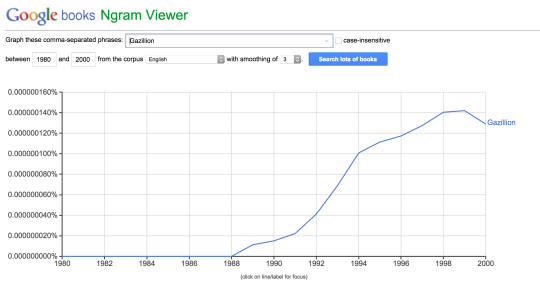
You can type any word and see when it started appearing in books. For example…one of my characters was going to say “gazillion” (I write YA) in 1994. Was “gazillion” used back then?
And the answer is…YES! It started trending in 1988 and was quite popular in 1994.
Enjoy ^_^
This is really important, especially because language can change in very unexpected ways.
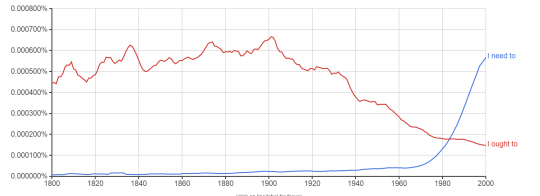
For example, did you know that before 1986 people never said “I need to”?Instead, they were far more likely to say “I ought to”, “I have to”, “I must”, or “I should”.
Don’t believe me?
Anyway, most people won’t notice subtle changes like that. But your reader will notice and be confused when characters in your medieval world use metaphors involving railroads and rockets.
One of the things you can do besides use Google Ngrams is to read books or watch movies written in the time period you want to set your story. The key here is that they can’t just be set in that time period, they have to have been made in that time period.
Also, there’s a Lexicon Valley episode on this very topic which I highly recommend. It’s called Capturing the Past.
Absolutely vital for writing any period piece, and it goes back for centuries. I use it frequently when writing my Jonathan Strange & Mr Norrell prose, to find out what was common usage in the Georgian/Regency era.
Here’s master post of some great MCAT study materials and resources. Click on the bold titles to open links to folders containing the files listed below. Good luck!!!
These materials will help build your knowledge and test taking skills, they may not fit the current MCAT exam criteria but it will definitely build your knowledge of the subjects being tested.
I believe in free education, one that’s available to everyone; no matter their race, gender, age, wealth, etc… This masterpost was created for every knowledge hungry individual out there. I hope it will serve you well. Enjoy!
FREE ONLINE COURSES (here are listed websites that provide huge variety of courses)
Please feel free to add more learning focused websites.
*There are a lot more learning websites out there, but I picked the ones that are, as far as I’m aware, completely free and in my opinion the best/ more useful.
You’re welcome heauxs
Cause school is starting soon and this might be helpful ☺

 the1timetraveller