I’m watching that documentary “Before Stonewall” about gay history pre-1969, and uncovered something which I think is interesting.
The documentary includes a brief clip of a 1954 televised newscast about the rise of homosexuality. The host of the program interviewed psychologists, a police officer, and one “known homosexual”. The “known homosexual” is 22 years old. He identifies himself as Curtis White, which is a pseudonym; his name is actually Dale Olson.
So I tracked down the newscast. According to what I can find, Dale Olson may have been the first gay man to appear openly on television and defend his sexual orientation. He explains that there’s nothing wrong with him mentally and he’s never been arrested. When asked whether he’d take a cure if it existed, he says no. When asked whether his family knows he’s gay, he says that they didn’t up until tonight, but he guesses they’re going to find out, and he’ll probably be fired from his job as well. So of course the host is like …why are you doing this interview then? and Dale Olson, cool as cucumber pie, says “I think that this way I can be a little useful to someone besides myself.”
1954. 22 years old. Balls of pure titanium.
Despite the pseudonym, Dale’s boss did indeed recognize him from the TV program, and he was promptly fired the next day. He wrote into ONE magazine six months later to reassure readers that he had gotten a new job at a higher salary.
Curious about what became of him, I looked into his life a little further. It turns out that he ultimately became a very successful publicity agent. He promoted the Rocky movies and Superman. Not only that, but get this: Dale represented Rock Hudson, and he was the person who convinced him to disclose that he had AIDS! Hewrote the statement Rock read. And as we know, Rock Hudson’s disclosure had a very significant effect on the national conversation about AIDS in the U.S.
It appears that no one has made the connection between Dale Olson the publicity agent instrumental in the AIDS debate and Dale Olson the 22-year-old first openly gay man on TV. So I thought I’d make it. For Pride month, an unsung gay hero.
dude had guts, someone needs to update his Wikipedia page
Acephobia in the LGBT+ Community from the documentary (A)sexuality.
It is just…so fucking weird how threatened people feel when it comes to Asexuality. I still can’t wrap my mind around it.
I’m so happy this post is being reblogged by LBGT+ people who aren’t asexual. I keep on reading posts by non-ace LGBT+ people of support to the ace community, and of being stunned by this reaction by a movement which should know better than to judge. AND THAT MAKES THIS ACE SO FREAKING HAPPY. The woman in the first photo expresses my sentiment. I know I belong in the queer/LGBTQIA movement. I want to belong. But I just don’t know if I’m welcome. I’m so happy that there are so many people on Tumblr who do not fall into the catagory of outright refusal of asexuality.
I know not a lot of people understand asexuality. And I know there’s confusion about it, about our experiences, and about how we fit in the movement. But let’s talk about this. Let’s have this conversation.
I mostly don’t delve into the ace tags, but I hear there’s a lot of ace-hate that and I really don’t get it. I don’t understand how asexuality is threatening.
You know what I (as a queer ace-spectrum person) find most threatening? Getting unwanted sexual unwanted advances from both queer and straight people. I’ve gotten them from people of all spectrums and it always makes me profoundly uncomfortable, and often unsafe. It just boggles my mind how people are upset by the concept of asexuality. That’s like getting really mad at someone who isn’t hungry. What’s the point? Just shut up eat your own sandwich. (And stop chewing on me.)
Wow, the fuck the people in those images.
Nobody has the right to disrespect anybody else’s sense of self. It may not be for, you but that does not give you the right to be an asshole.
We really need to push more for LGBTQIA+ to be a standard,instead of just LGBT, especially considering that even the B and T are already invisible in much of the community.
Not supporting some of us = not supporting all of us.
Not supporting some of us = not supporting all of us.
It really, really does bear repeating.
I couldn’t be further from ace, but for serious.
If we’re not in this together, we’re not in this at all.
This makes me so angry. I have friends who are ace, and they are just as much a part of the queer community as I am.
We need to embrace asexuality and treat it with the respect that it deserves.
I heart the non-aces who reblog this so hard. ❤ Thank you friends.
There’s been at least 1 iconic bi musician in the spotlight for every decade in the last 100 years. And there’s at least one for many genres too!
1910’s: Bessie Smith, Blues & Jazz
She was one of the most popular singers during the time, and was given the nickname “Empress of the Blues”. She embraced her bisexuality. In fact, one of her hits, “It’s Dirty But Good” includes lyrics alluding to lesbian sex.
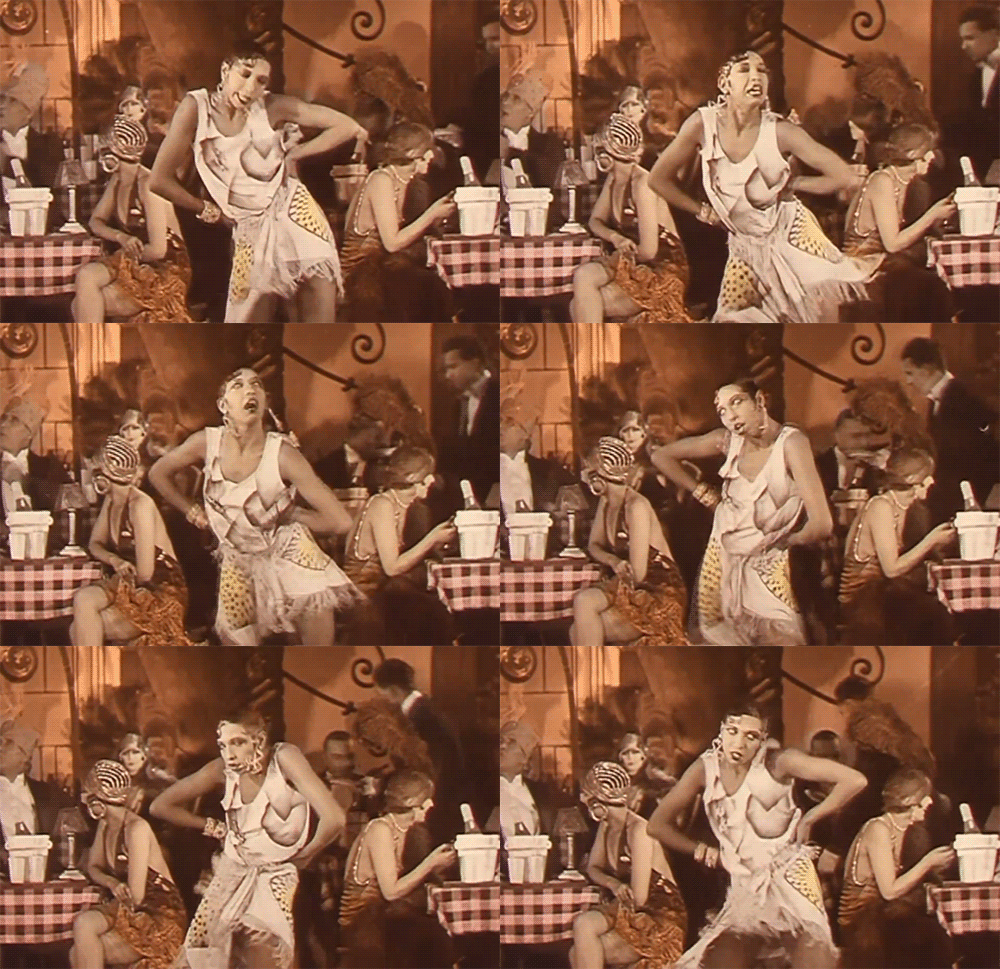
1920’s: Josephine Baker, Jazz
Cabaret dancer, singer, and actress. She fled the US because of racism and served France in WW2 as a spy against the Nazi’s. She came back to the US and was a civil rights activist. She was more private about her bisexuality but she is linked to bi artist Frida Kahlo.
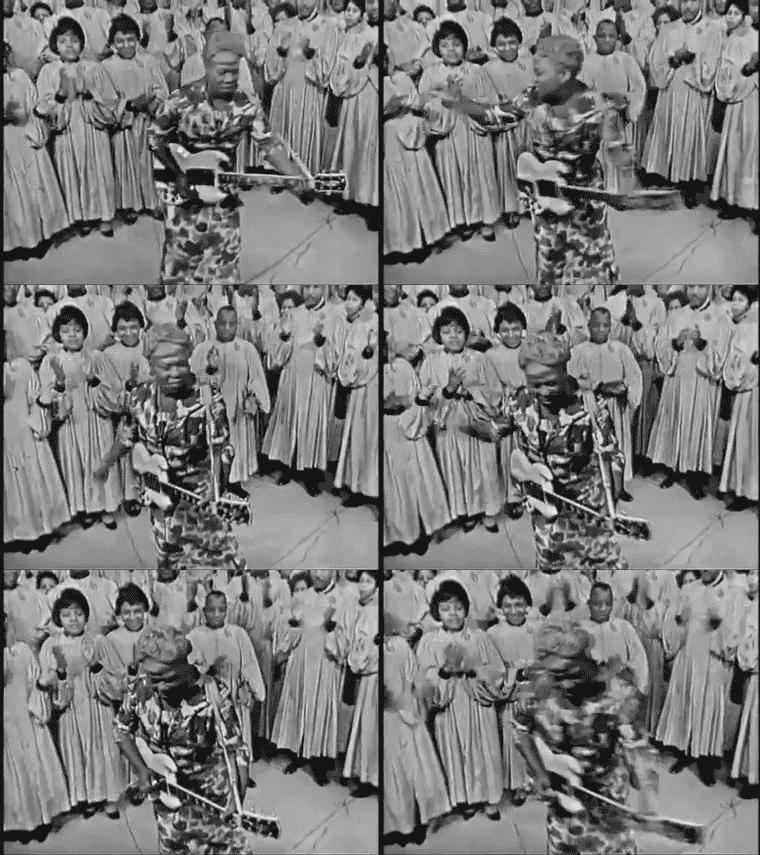
1930’s: Sister Rosetta Tharpe, Gospel, R&B, Jazz, Rock
She’s called the “Godmother of Rock n’ Roll”, and is a huge pioneer in this genre. The PBS special “Sister Rosetta Tharpe: The Godmother of Rock n’ Roll” tells us she was bisexual, and tried to live as openly as she could during her time.
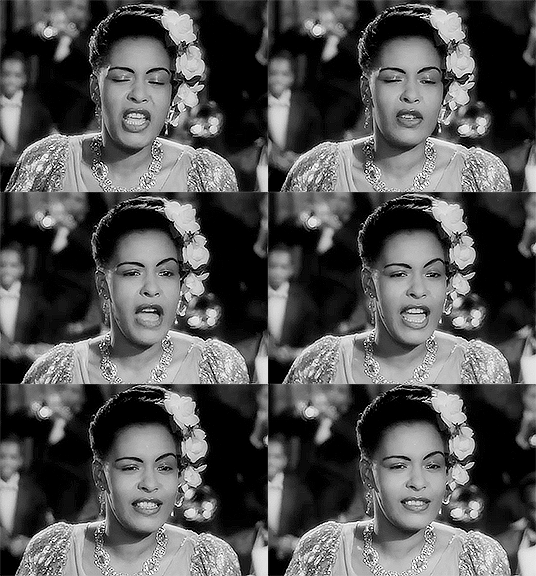
1940’s: Billie Holiday, Jazz
One of the most legendary jazz singers of all time. Her stormy relationships with men inspired many of her songs, but she was also linked to actress Tallulah Bankhead.
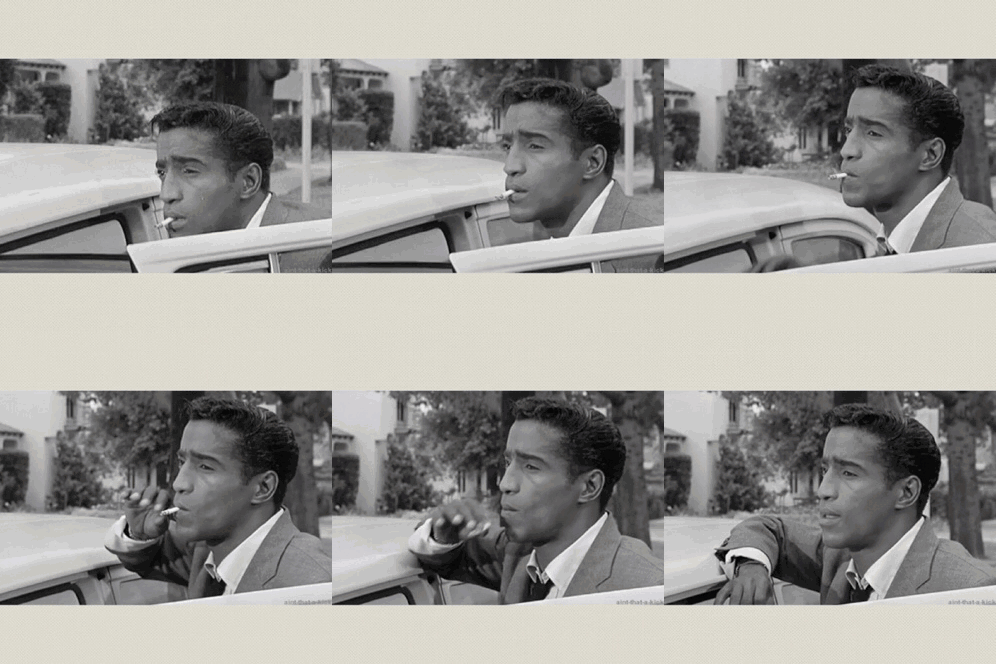
1950’s: Sammy Davis Jr., Jazz, Swing, Traditional Pop
“Rat Pack” singer, dancer, vaudevillian. He was a huge civil rights activist, and after converting to Judaism he found solidarity between the Jewish and black communities’ struggles. He fought for interracial marriage. He was a supporter of gay rights, and spoke openly about his affairs with men and women.
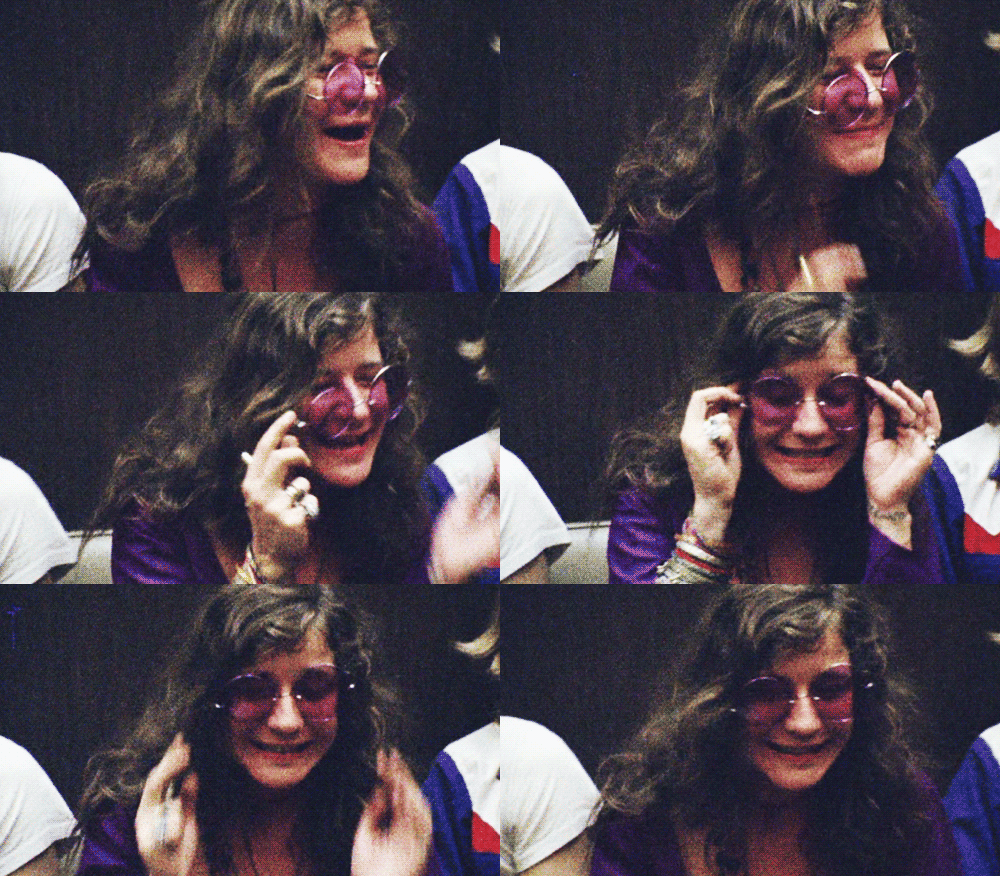
1960’s: Janis Joplin, Pshychedelic Rock, Blues
Bridged the gap between pshychedelic rock/blues and soul. Lived only 27 years but her musical legacy didn’t wait for her death to start influencing the sound of her contemporaries. Openly had relationships with women, hid nothing.
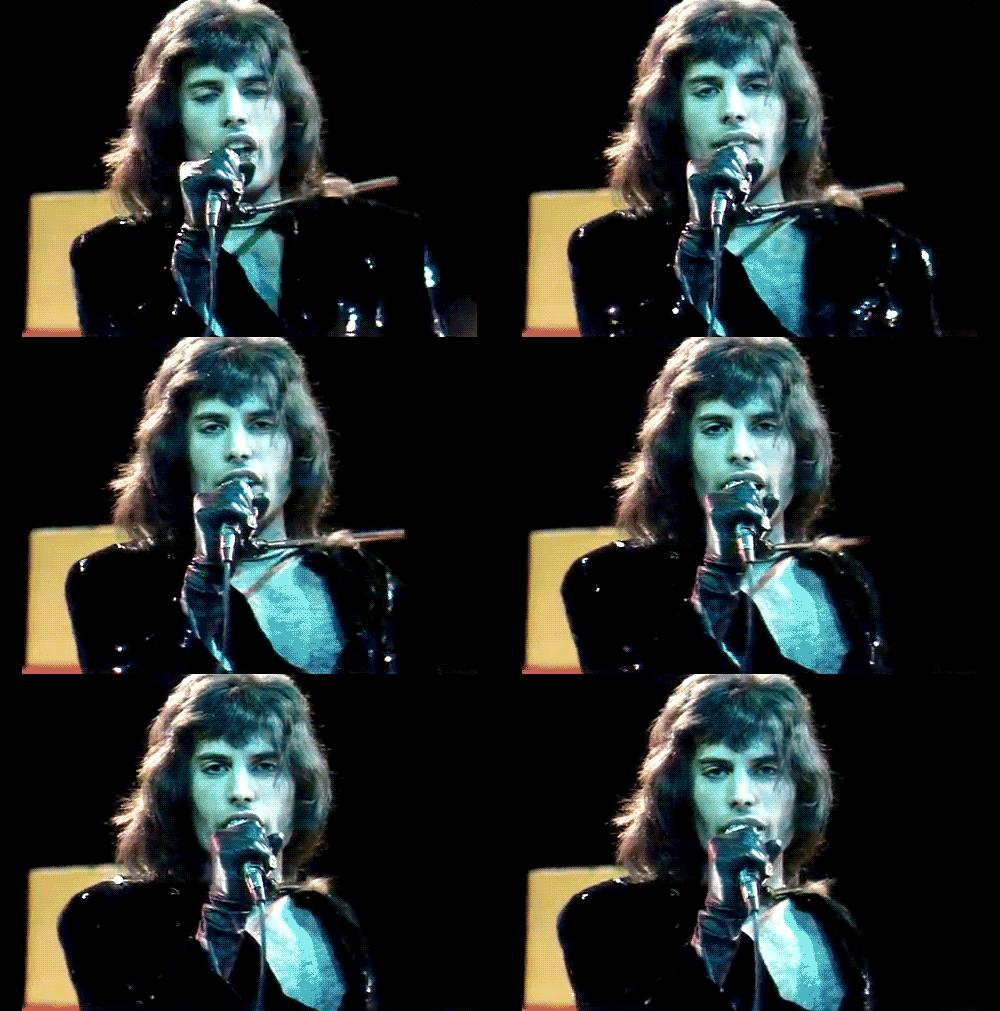
1970’s: Freddie Mercury, Hard Rock, fused with everything else under the sun
The most famous bisexual in history. Voice of an angel. Loved titties. Wouldn’t record a duet with Michael Jackson because he brought his llama to the studio. Musical prodigy. He knew he’d be a legend from the beginning. He was more private about his sexuality, but he dated men and women nonetheless, and he wrote and sang about them.
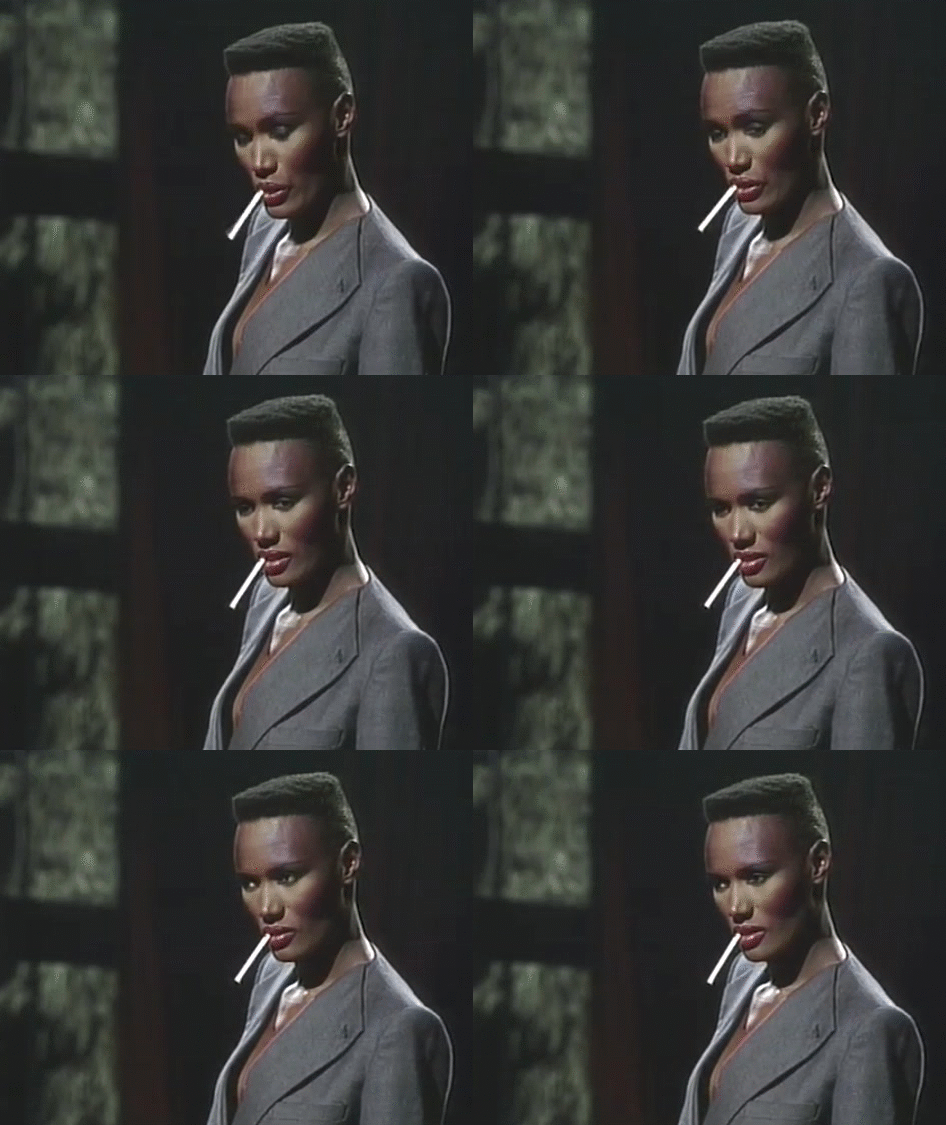
1980’s: Grace Jones, Funk, Disco
Androgynous icon. No record of her actually using the word “bisexual”, though has declared her attraction to women, and of course married men. She’s a gem. Her early music was rooted in disco, but she brought her own Jamaican reggae influences to the sound. Her striking look made her a favorite muse within the New York art scene of the 70’s and 80’s.
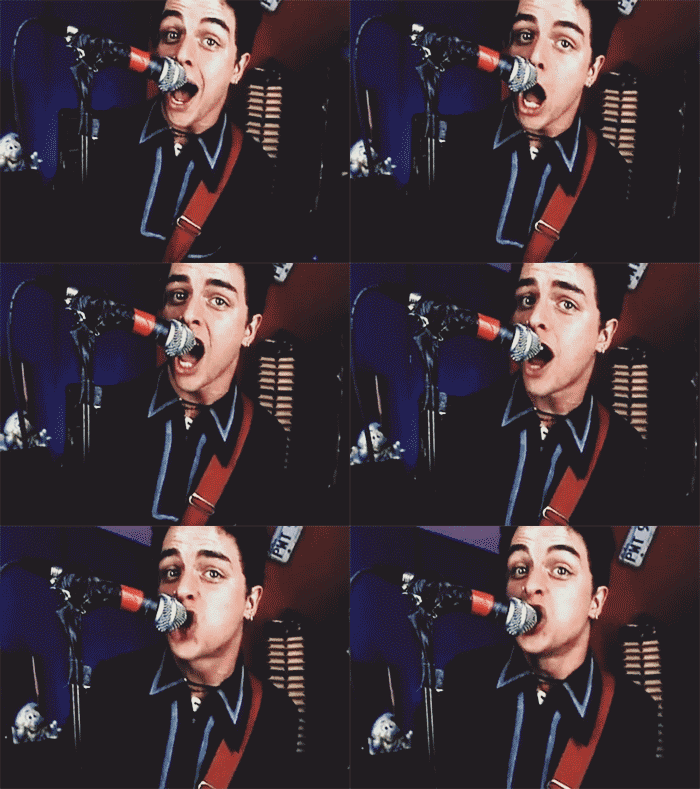
1990’s: Billie Joe Armstrong, Punk Rock
Frontman of Green Day, who are credited with capturing the mainstream’s interest in punk rock. They were still very political, and wrote about not blindly following the government. Their song “Coming Clean” is about him questioning his bisexuality.
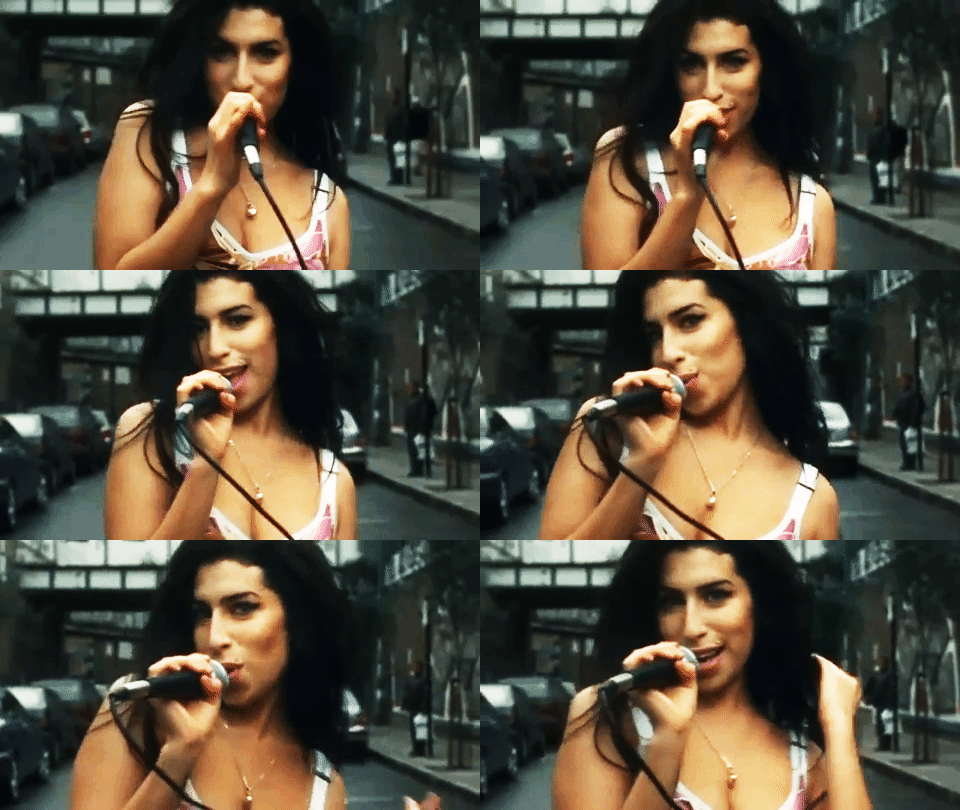
2000’s: Amy Winehouse, Jazz, Blues, Soul, R&B
Brought jazz and blues back to the mainstream after 40 years of them essentially being irrelevant to popular music. Her pen game was unmatched. Unapologetically bisexual and sang about women in a few songs.
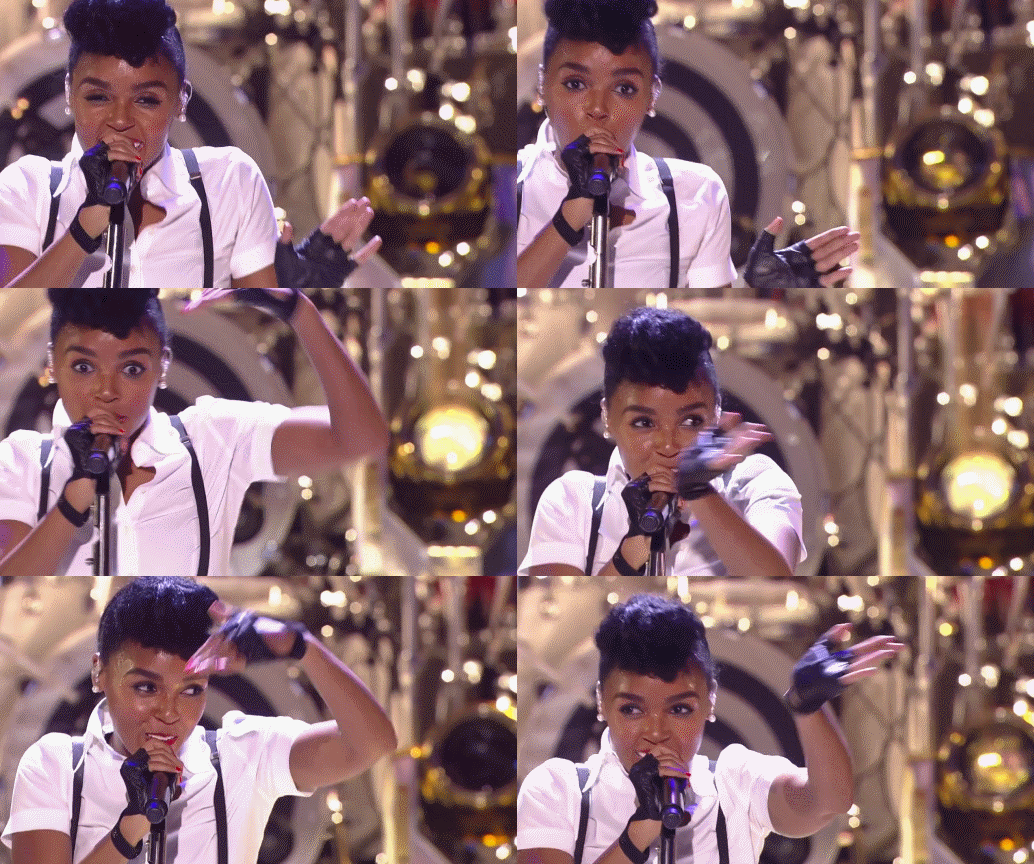
2010’s: Janelle Monáe, Funk, R&B, Pop
A protégé of Prince, and the funkiest entity in the music industry since his passing. She has spoken about how her gender non-conformity is an homage to her working class roots, and speaks about feminism, race, and sexuality in her music. A legend in the making.
It makes me really happy that bisexuals have played a big part in shaping entertainment and music and have been a huge presence for the past century. Part of why it makes me feel so happy is because bisexuality is often dismissed as performative, attention-seeking, and empty. And it’s like, well…we’re definitely performing…and we just so happen to have gotten attention from it. But it’s not unsubstantial. Bi entertainers are singing about the meaningful relationships that their attraction to multiple genders has enabled them to have.
The other thing about the word “queer” is that almost everyone I’ve seen opposed to it have been cis, binary gays and lesbians. Not wanting it applied to yourself is fine, but I think people underestimate the appeal of vague, inclusive terminology when they already have language to easily and non-invasively describe themselves.
Saying “I’m gay/lesbian/bi” is pretty simple. Just about everyone knows what you mean, and you quickly establish yourself as a member of a community. Saying “I’m a trans nonbinary bi woman who’s celibate due to dysphoria and possibly on the ace spectrum”… not so much. You’re lucky to find anyone who understands even half of that, and explaining it requires revealing a ton of personal information. The appeal of “queer” is being able to identify yourself without profiling yourself. It’s welcoming and functional terminology to those who do not have the luxury of simplified language and occupy complicated identities. *That’s* why people use it – there are currently not alternatives to express the same sentiment.
It’s not people “oppressing themselves” or naively and irresponsibly using a word with loaded history. It’s easy to dismiss it as bad or unnecessary if you already have the luxury of language to comfortably describe yourself.
There’s another dimension that always, always gets overlooked in contemporary discussions about the word “queer:” class. The last paragraph here reminds me of a old quote: “rich lesbians are ‘sapphic,’ poor lesbians are ‘dykes’.”
The reclaiming of the slur “queer” was an intensely political process, and people who came up during the 90s, or who came up mostly around people who did so, were divided on class and political lines on questions of assimilation into straight capitalist society.
Bourgeois gays and lesbians already had “the luxury of language” to describe themselves – normalized through struggle, thanks to groups like the Gay Liberation Front.
Everyone else, from poor gays and lesbians to bi and trans people and so on, had no such language. These people were the ones for whom social/economic assimilation was not an option.
The only language left, the only word which united this particular underclass, was “queer.” “Queer” came to mean an opposition to assimilation – to straight culture, capitalism, patriarchy, and to upper class gays and lesbians who wanted to throw the rest of us under the bus for a seat at that table – and a solidarity among those marginalized for their sexuality/gender id/presentation.
(Groups which reclaimed “queer,” like Queer Patrol (armed against homophobic violence), (Queers) Bash Back! (action and theory against fascism, homophobia, and transphobia), and Queerbomb (in response to corporate/state co-optation of mainstream Gay Pride), were “ultraleft,” working-class, anti-capitalist, and functioned around solidarity and direct action.)
The contemporary discourse around “queer” as a reclaimed-or-not slur both ignores and reproduces this history. The most marginalized among us, as OP notes, need this language. The ones who have problems with it are, generally, among those who have language – or “community,” or social/economic/political support – of their own.
You are too young to remember that 25 years ago certain people had an absolute fit and fell in it when the 1993 March On Washington official title included bisexuals, or how horrible people were to bi women especially when they tried to participate in lesbian/dyke spaces. I was in the room when the Julia Penelope-inspired Lesbians For Lesbians refused to participate in Northampton, Massachusetts Pride because bi people were being included and held their own picnic in protest. You may even be too young to remember the exact same fight about trans people being added to the term LGBT, or people saying transantagonistic and generally horrible things about trans folks when we tried to join queer groups and Pride events, even those of us who are queer-identified (which especially confused me). So it’s completely exhausting to discover that we are having, literally, the same fight again about some slightly different but basically associated concept in which a sexual minority group that is consistently stigmatized and disempowered is trying to join under the banner of resistance to the heteronormative, cisnormative, allosexual mainstream.
::takes a deep breath and collects myself::
Here’s the thing, Brave Correspondent: at the end of the day, there’s who is privileged and empowered by the dominant culture and then there is everybody else and you, my friend, are the else. You are, along with me and a whole lot of other people for whom “bride and groom” are not now and may never be a thing, for those of who are neither pink nor blue, for everyone who has ever needed to call ahead and ask whether our family group would be welcomed, everyone who has ever needed to take a friend into the public washroom (or wished we could). Along with all the rest of us for whom the primary narrative that’s shoved down little children’s throats from birth (or while they’re still fetal, in some cases, thanks to the fresh new misery of the gender-reveal party in which people start projecting gendered expectations on tiny humans LITERALLY BEFORE THEY TAKE THEIR FIRST BREATH) doesn’t apply.
How many people saying this is it gonna take before people fucking listen?
THIS IS THE SAME FIGHT. This is the same argument. This is the same shit, 25 years later.



 the1timetraveller