so i got bored and decided it was a good idea to put together in chronological order every mcu movie and tv show up to captain marvel. i know there are plenty of infographs online but personally i find them kinda messy and i think the posters alone work much better. i tried to be as accurate as possible so let me know if there’s any mistake.
For people who want to use Dreamwidth, but are totally confused about how it works!
What is Dreamwidth?
Dreamwidth is a social media platform founded in 2009 after Strikethrough
It’s made out of a heavily-modified version of Livejournal code
It’s based around producing your own original content, and seeing original content other people post
The site is owned and run by fans and aims to provide creative people with an Internet home
Getting around your account
Your journal is like your “home”. It’s where you keep your stuff. It’s got different parts:
Recent Entries: View your posts in chronological order
(yourusername.dreamwidth.org)
Profile: Your “about” page
(yourusername.dreamwidth.org/profile)
Archive: See your posts as a calendar
(yourusername.dreamwidth.org/archive)
Tags: See all the tags you’ve used and go to their posts
(yourusername.dreamwidth.org/tag)
Memories: Like the “Likes” feature on Tumblr
You also have a “Reading” page (yourusername.dreamwidth.org/read)
This is like your Tumblr dash
It’s where you read entries from your “circle”, the people and communities you’re subscribed to
You can customize it a lot with filters and control who you see when
You also have a “Network” page (yourusername.dreamwidth.org/network)
This is where you see posts from everyone that everyone in your circle subscribes to
It’s a great way to discover new stuff and also learn what awful taste some of your circle members have
Finding new things
Listing an Interest in your profile is like getting listed in the phonebook. This is opt-in, choosing to say, “Yes! I’m really into this thing! Consider me a person who blogs about it!
Content Search is the more powerful way to search through the blog of everyone who’s opted into it, so you can look for everyone who’s posting about a certain thing right now. However, you’ll have to wade through a lot more junk.
Communities are Dreamwidth’s social hubs. They’re places where a lot of people can share content they’re interested in and talk to each other. Unlike Tumblr tags, they’re managed by specific people and have rules, so people behaving badly can get kicked out.
Latest Things is a direct firehose of EVERYTHING PUBLICLY POSTED TO THE SITE, HOMG
Privacy controls?! That’s a thing?!
You get to choose who sees your posts! You can make your posts public, private, or “locked”, which means only people you’ve added to your access list can read them
When you add a new person to your circle you can choose to subscribe to them, to make their posts show up on your Reading page, and/or to grant access, which lets them see your locked posts. You can do one, the other, or both!
Likewise, communities can make posts viewable to members only.
You can also create custom access filters, to allow only some of your access list to see a post.
Banning someone means they cannot leave you comments or send you messages. There are more advanced tweaks to make sure they never show up on your reading page if they post to a community you subscribe to, or remove them from the comments on a post.
Comments
The comments to a post are where the real fun happens.
Comments are sent to the email of whoever you’re replying to. They’re a real conversation. You’re not shouting into the void–you’re talking back directly to the post’s originator and other commenters.
You can edit your comment so long as it hasn’t been replied to, and you can delete your own comments.
The originator of the post, and administrators if it’s a community, can delete threads, or “freeze” them, leaving them intact but preventing anyone from replying to them.
You will add new skills to your resume
Dreamwidth leaves a lot more “backend” open so you can customize your experience to a huge degree. However, this means learning or using coding languages like HTML and CSS
The comment box on entries does not have a built-in text editor, so you will have to add your own HTML if you want to add <i>italic</i>, <b>bold</b>, or <a href=“http://websiteurl.com”>links</a>.
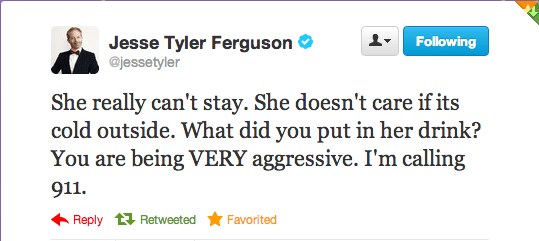
I LITERALLY THINK THIS EVERY TIME THE SONG COMES ON
What song is this talking about?
‘Baby It’s Cold Outside’
Otherwise known as the original ‘Blurred Lines’
HEY FRIENDS HISTORICAL REMINDER: ‘WHAT’S IN THIS DRINK’ ISN’T TALKING ABOUT DRUGS, HE IS NOT TRYING TO ROOFIE HER
THE SONG IS TALKING ABOUT ALCOHOL
but still a pushy song
historical reminder that the reason pina coladas and pink squirrels are known as “girly drinks” is because they mask the taste of alcohol and men were know to give women these drinks without informing them that they were alcoholic. It takes a couple of drinks to realize you’ve been consuming alcohol and by then you’re more susceptible to suggestion, making it easier for him to convince you to stick around and have a third drink. When this song was written in 1944 most women didn’t drink regularly, meaning they had a low tolerance and it would only take 2-3 drinks to get her drunk enough that she wouldn’t be able to put up much of a fight. This was the 1940s version of being roofied
No no no it was not.
“Hey what’s in this drink” was a stock joke at the time, and the punchline was invariably that there’s actually pretty much nothing in the drink, not even a significant amount of alcohol.
See, this woman is staying late, unchaperoned, at a dude’s house. In the 1940’s, that’s the kind of thing Good Girls aren’t supposed to do – and she wants people to think she’s a good girl. The woman in the song says outright, multiple times, that what other people will think of her staying is what she’s really concerned about: “the neighbors might think,” “my maiden aunt’s mind is vicious,” “there’s bound to be talk tomorrow.“ But she’s having a really good time, and she wants to stay, and so she is excusing her uncharacteristically bold behavior (either to the guy or to herself) by blaming it on the drink – unaware that the drink is actually really weak, maybe not even alcoholic at all. That’s the joke. That is the standard joke that’s going on when a woman in media from the early-to-mid 20th century says “hey, what’s in this drink?“ It is not a joke about how she’s drunk and about to be raped. It’s a joke about how she’s perfectly sober and about to have awesome consensual sex and use the drink for plausible deniability because she’s living in a society where women aren’t supposed to have sexual agency.
Basically, the song only makes sense in the context of a society in which women are expected to reject men’s advances whether they actually want to or not, and therefore it’s normal and expected for a lady’s gentleman companion to pressure her despite her protests, because he knows she would have to say that whether or not she meant it, and if she really wants to stay she won’t be able to justify doing so unless he offers her an excuse other than “I’m staying because I want to.” (That’s the main theme of the man’s lines in the song, suggesting excuses she can use when people ask later why she spent the night at his house: it was so cold out, there were no cabs available, he simply insisted because he was concerned about my safety in such awful weather, it was perfectly innocent and definitely not about sex at all!) In this particular case, he’s pretty clearly right, because unlike in Blurred Lines, the woman actually has a voice, and she’s using it to give all the culturally-understood signals that she actually does want to stay but can’t say so. She states explicitly that she’s resisting because she’s supposedto, not because she wants to: “I ought to say no no no…" She states explicitly that she’s just putting up a token resistance so she’ll be able to claim later that she did what’s expected of a decent woman in this situation: "at least I’m gonna say that I tried.” And at the end of the song they’re singing together, in harmony, because they’re both on the same page and they have been all along.
So it’s not actually a song about rape – in fact it’s a song about a woman finding a way to exercise sexual agency in a patriarchal society designed to stop her from doing so. But it’s also, at the same time, one of the best illustrations of rape culture that pop culture has ever produced. It’s a song about a society where women aren’t allowed to say yes…which happens to mean it’s also a society where women don’t have a clear and unambiguous way to say no.
Reblogging for that last bit because this is what I rant about to Kellie every time this discourse happens on my blog but I’m too lazy to type it out. SO thank you to @dangerwaffle for not being as lazy as me. This song has a cultural context, and a historical context, and it’s worth talking about how fucked up that context is, but you have to get WHICH context it is right first.

















 the1timetraveller